
- Restoration of organic traffic after CMS migration.
- Recovery of lost keyword positions in Google TOP-10.
- Improvement of indexing and technical stability of the new website structure.
Case Study: Technical SEO Recovery and Traffic Restoration After CMS Migration
1. Project Overview
Niche: E-commerce (Electronics Online Store).
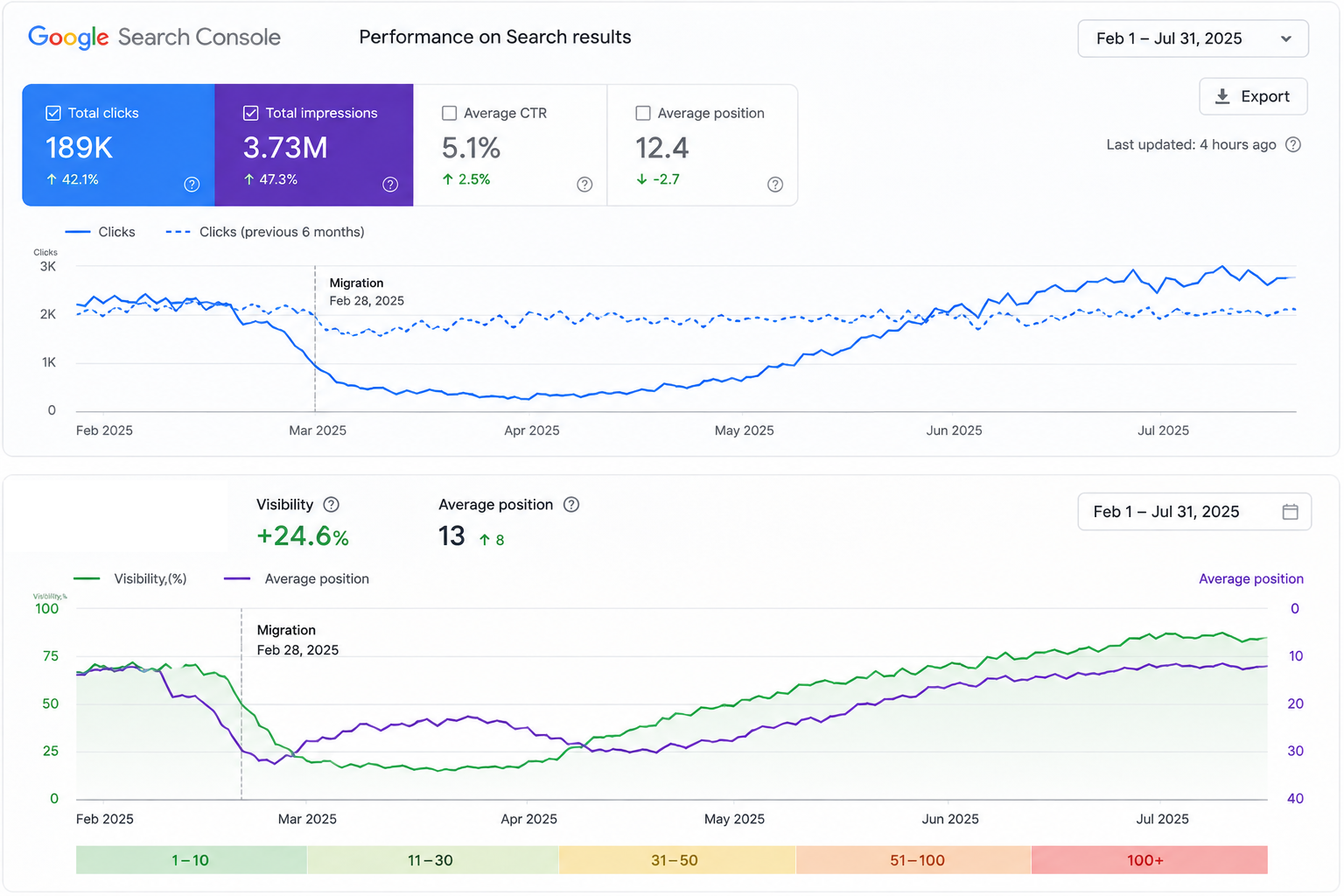
Pre-launch status: The client approached us in a crisis situation. Following a migration to a new platform (CMS), organic traffic had plummeted by over 50%. The website was rapidly losing rankings across key categories, leading to a sharp decline in online sales.
2. Identified Issues Post-Migration
A comprehensive technical audit revealed critical errors made during the site transfer:
1. URL Structure Breakdown.
The new CMS altered page addresses, while old URLs returned 404 errors. Consequently, search engines were dropping the old pages from their index.
-
- Problem: loss of indexed pages and link equity.
2. Meta-data Loss.
Previously optimized Titles and Descriptions were not transferred, rendering the search snippets irrelevant.
-
- Problem: decreased CTR and weakened relevance signals.
3. Duplicate Content.
The new platform generated numerous technical duplicates, cluttering the index and diluting link equity.
-
- Problem: wasted crawl budget and diluted ranking potential.
3. Goals and Objectives
- Restoration: Return traffic and ranking metrics to pre-migration levels.
- Indexing: Ensure search engine bots correctly crawl the new site structure.
- Growth: Exceed pre-crisis performance by fixing structural flaws within the new CMS.
4. Implementation: Step-by-Step
Step 1: Restoring Connections (301 Redirects)
The most vital step was preserving the link equity of the old pages. We prepared and implemented a massive redirection map:
- Redirection mapping: mapped over 10,000 old URLs to their corresponding new addresses.
- Implementation: set up page-by-page 301 redirects to guide users and search bots to the current pages while retaining the site’s accumulated authority.
Step 2: Optimizing Crawl and Indexing
We eliminated the technical «noise» generated by the new system:
- Robots & sitemap: revised robots.txt and sitemap.xml files, specifying priority paths for indexing.
- Canonicalization: configured canonical tags for filter and pagination pages to prevent indexing of duplicate content.
- Faster recrawling: accelerated site re-crawling using the URL Inspection tool in Google Search Console.
Step 3: Meta-data Regeneration
To restore page relevance in search results, we focused on tag optimization:
- Mass restoration: restored Titles and Descriptions for categories and product cards en masse, based on an analysis of cached site versions.
- Automation for new products: implemented automated meta-tag generation templates for new products, incorporating specific attributes (model, brand, SKU).
5. Final Results
Thanks to prompt action, the decline was halted and then fully reversed:
| Outcome | Result |
| Organic traffic recovery | 3 months to fully restore organic traffic to pre-migration levels |
| Growth after recovery | +20% growth in organic traffic above previous peaks by the end of the 4th month |
| Keyword rankings | TOP-10: successful return of all high-volume keywords to their previous positions |
6. Verification Tools
- Google Search Console: a performance graph featuring a distinct V-shaped curve (sharp drop followed by steady recovery).
- Topvisor: a website visibility and average position chart confirming the keywords’ return to the TOP rankings.